


The European Union and the Kwara State
Government are taking stock of progress under the EU-supported health
interventions, as a visiting EU team assesses results on the ground and
explores opportunities for deeper cooperation. The mission will also spotlight
the EU’s investment in renewable energy in Kwara, with the delegation scheduled
to attend the commissioning of an EU-funded solar mini-grid.
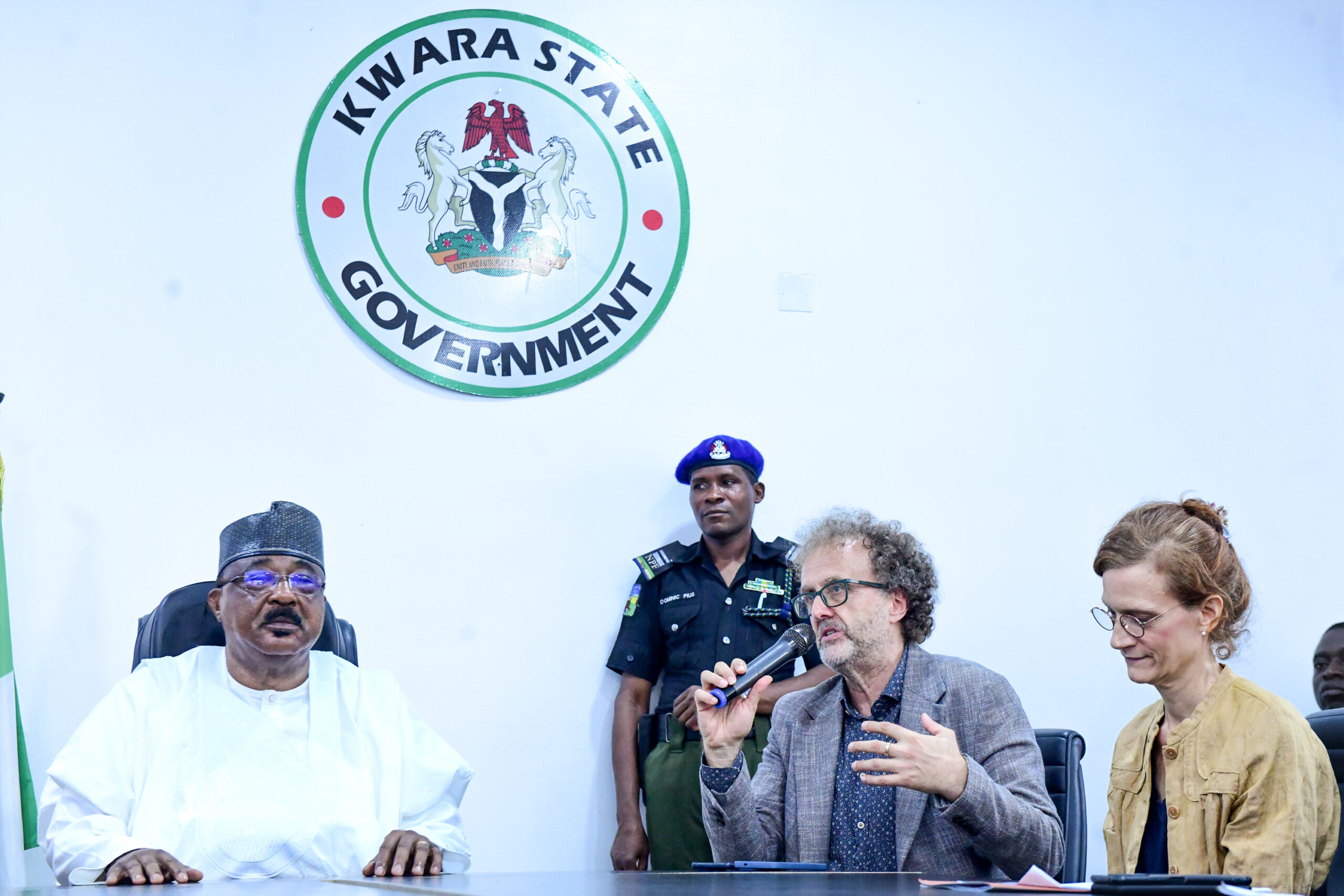
The team, led by the Head of Partnerships
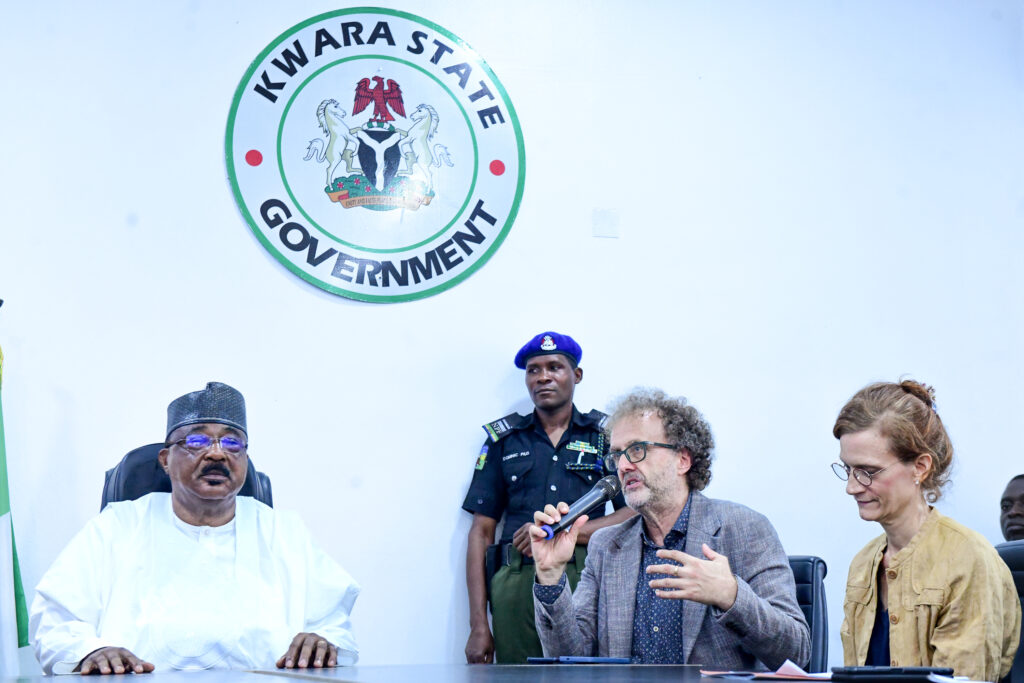
at the EU Delegation to Nigeria and ECOWAS, Massimo De Luca, on Wednesday met
with top officials of the Kwara State Government as part of a two-day mission. Governor
AbdulRahman AbdulRazaq, was represented by Deputy Governor Kayode Alabi.
Representatives of the German Embassy, UNICEF and UNFPA also joined the
engagement.
De Luca said the mission offered an
opportunity to assess how cooperation was translating into results for
communities. “It is very important that we take stock, and we see how we are
moving together,” he said.
A key focus of the visit is the EU-funded
Strengthening Access to Reproductive and Adolescent Health (EU-SARAH)
programme, implemented by UNICEF and UNFPA in collaboration with Nigerian
government institutions.
The four-year programme operates in
Adamawa, Kwara and Sokoto states, supporting reproductive, maternal, newborn,
child and adolescent health and contributing to Nigeria’s progress towards
universal health coverage.
In Kwara, the programme is supporting
stronger health services, workforce capacity, family planning, data use and
community engagement, with particular attention to women, children and
adolescents.
De Luca said the partnership also placed
importance on domestic investment and government ownership as EU support grows.
“With the growing budget from our side, we
would also like to understand how much Kwara is investing and delivering to the
health sector,” he said.
He described the EU’s role as working
alongside government, bringing expertise and support while reinforcing local
ownership.
Our role is to walk alongside Kwara State,
bring expertise and support its journey towards stronger and more sustainable
health outcomes,” De Luca said.
Deputy Governor Kayode Alabi welcomed the
delegation and said Kwara valued its cooperation with the EU and other
development partners.
“For this administration, better health
outcomes depend on services that people can reach, trust, see and use,” Alabi
said.
He said the state would continue working
with partners to strengthen coordination, use evidence to guide decisions and
increase its own contribution to health services.
“Kwara State Government is committed to
working with you on practical steps to strengthen coordination, use evidence to
guide decisions, and increase the state's contribution,” he said.
Head of Development Cooperation at the
German Embassy, Karin Jansen, said the mission reflected a shared commitment to
supporting Nigeria’s development priorities and would provide an opportunity to
engage directly with health workers and communities.
“We look forward to hearing about your
priorities for the state and exploring how our cooperation can best complement
these efforts,” Jansen said.
Kwara State Commissioner for Health, Dr
Amina Ahmed El-Imam, said EU-SARAH was helping the state strengthen services
while identifying areas requiring further investment.
“The EU-SARAH emphasis on service quality,
workforce capacity, community engagement and overall system strengthening has
helped us identify gaps and direct resources,” she said.
She highlighted improvements in health
infrastructure, referrals, family planning and services for adolescents and
young people, as well as the state’s counterpart funding for family planning
commodities.
Over the two-day mission, the delegation
will visit health facilities and communities to engage frontline health workers
and people benefiting from EU-supported interventions, assess progress and
identify areas where cooperation can be strengthened.
The importance of reliable renewable
energy sources for better health outcomes was further highlighted by Dr Karin Jansen, Head of cooperation at the
German Embassy as part of team Europe s investment in Kwara. The EU-Germany
government Co- funded solar mini-grid project to be commissioned during this
mission thus reflects the wider scope of team Europe’s partnership with Kwara
State, supporting access to clean energy alongside stronger health services and
sustainable local development.