




More than 10,000
people in Oke-Oyi, Kwara State, are now benefiting from improved electricity
supply following the commissioning of a 581kW interconnected solar mini-grid
supported by the European Union, Germany and Nigeria.
The project is
providing electricity to households and businesses as well as other public
social facilities like; health facilities and schools, while creating new
opportunities for productive use of energy across the community.
Developed by Nayo
Tropical Technology under the Interconnected Mini-Grid Acceleration Scheme, the
project is supported by the European Union and the German Government through
the Nigeria Energy Support Programme, implemented by GIZ.
This
inter-connected Mini-grid which is located within Ibadan Electricity
Distribution Company’s (IBDC) franchise area, provides 24/7 electricity supply
using a combination of renewable energy generation and electricity supply from
the grid. This is another example of how distribution companies like Ibadan
DISCO are partnering with private energy utility companies like Nayo Tropical
Technology can work together to improve electricity supply in underserved
communities within DISCO’s franchise area
Speaking at the
commissioning, Head of Partnerships at the European Union Delegation to Nigeria
and ECOWAS, Massimo De Luca, said the project reflected the EU's Global Gateway
strategy of investing in sustainable infrastructure that delivers tangible benefits
for communities.
“The European
Union is proud to support initiatives such as this because they reflect the
spirit of our Global Gateway approach, investing in sustainable, high-quality
infrastructure that improves lives, strengthens local economies and creates
lasting partnerships,” De Luca said.
He highlighted
the collaboration between government institutions, development partners, the
private sector and the community as an important feature of the project, noting
that engagement with residents had shown how reliable electricity could support
healthcare, education, agriculture and other productive activities.
Head of
Cooperation at the German Embassy, Karin Jansen, said the project demonstrated
how renewable energy could be integrated with existing electricity
infrastructure to strengthen local power supply.
“What makes this
project particularly unique is the interconnected mini-grid model, which
demonstrates how distributed renewable energies can be integrated with an
existing electricity grid to strengthen local power supply,” Jansen said.
She said lessons
from Oke-Oyi could help inform the development of similar interconnected
mini-grids and other distributed energy solutions across Nigeria.
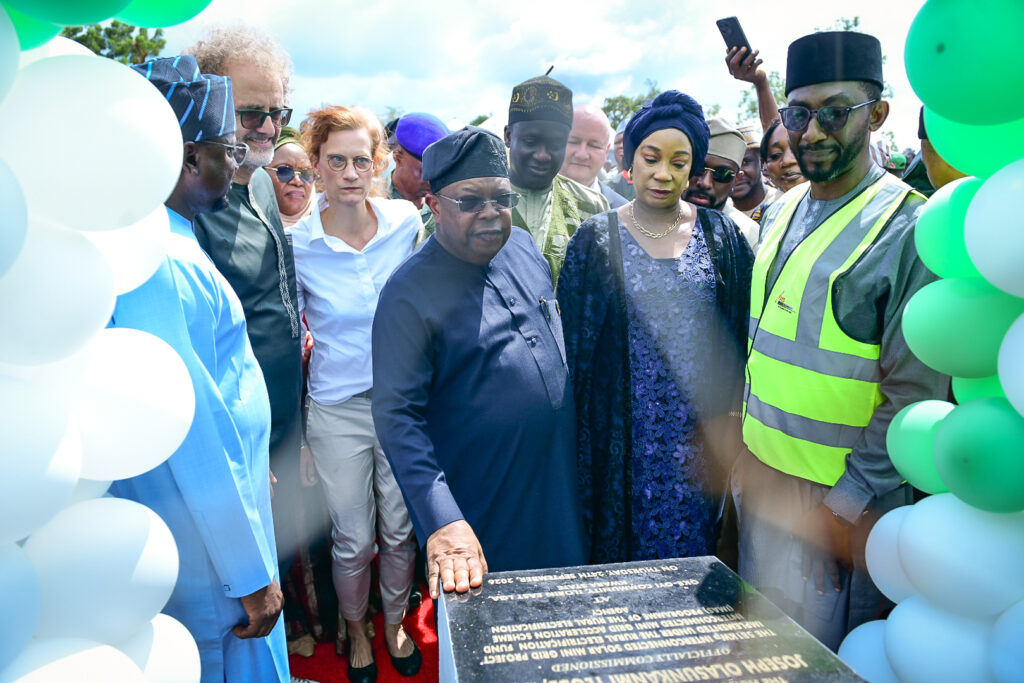
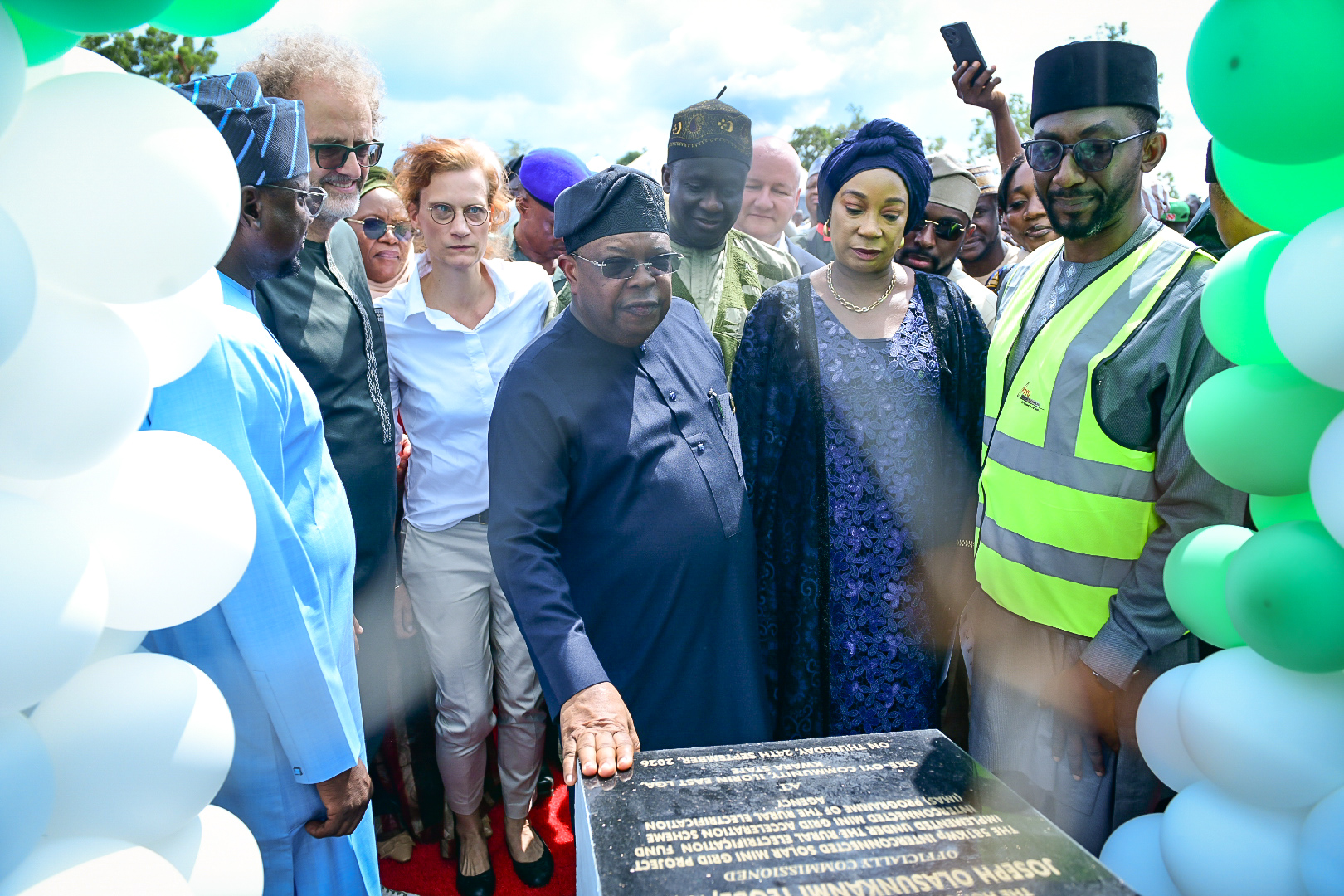
Minister of Power
Joseph Olasunkanmi Tegbe, who commissioned the facility on behalf of President
Bola Ahmed Tinubu, said the project demonstrated the importance of extending
electricity access to underserved communities.
“We are bringing
electricity to the last mile, bringing electricity to the end users and
bringing electricity to communities that deserve the dividends of democracy,”
Tegbe said.
He said the
Interconnected Mini-Grid Acceleration Scheme demonstrated how public funding
and development partnerships could attract private investment and create
commercially sustainable electricity projects.
The founder and Chief Executive Officer of Nayo Tropical Technology,
Okenwa Anayo, said the project had already connected about 180 households,
benefiting an estimated 1,000 people directly, and is expanding towards its
target of connecting 2,200 households. Once all 2,200 households are connected,
the project is expected to benefit up to 10,000 people, with wider benefits
extending to businesses, schools, healthcare facilities and other services
across the community.
Beyond
electricity access, the developer is working with the community to expand
productive use of energy, including through agro-processing cooperatives,
equipment and skills support designed to help local businesses increase
production and reach markets.
“We are building
a sustainable ecosystem hinged on a relationship and progress. We are looking
at prosperity beyond energy,” Anayo said.
Managing Director
of the Rural Electrification Agency, Abba Aliyu, said the project demonstrated
the importance of extending electricity infrastructure beyond Nigeria's major
cities to communities where reliable power could unlock economic and social opportunities.
“Real leadership
must travel to where the need is greatest. It must cross the highways, leave
the major cities behind and journey to the last mile, to communities whose
people have waited, sometimes for generations, for the dignity and opportunity
that electricity provides,” Aliyu said.
Representing
Kwara State Governor AbdulRahman AbdulRazaq, Speaker of the Kwara State House
of Assembly Yakubu Danladi-Salihu said improved electricity access could help
businesses operate for longer hours, reduce dependence on expensive alternative
power sources, strengthen education and healthcare, and create opportunities
for young people and entrepreneurs.
He urged
residents to protect the facility and take ownership of the infrastructure to
ensure its benefits are sustained.
The Oke-Oyi
project demonstrates how public institutions, development partners, utilities,
private developers and communities can work together to expand renewable energy
access. For the EU, it also illustrates how Global Gateway investments can
connect infrastructure with better services, productive economic activity and
new opportunities for communities.