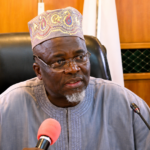











The Joint Admissions and Matriculation Board (JAMB) has explained why the Unified Tertiary Matriculation Examination (UTME) results cannot remain valid beyond one admission cycle, saying the examination is designed to rank candidates for limited admission spaces rather than serve as a qualifying examination.
The Board’s spokesman, Fabian Benjamin, stated this on Thursday during the monthly dialogue of the Education Writers Association of Nigeria (EWAN), themed “2026 JAMB Admission Policy Meeting Review and JAMB Scorecard: A Conversation with the Registrar.”
He represented the Registrar, Ishaq Oloyede, a professor of Islamic Studies, who was unavoidably absent due to an official assignment outside the country. Mr Oloyede, whose second and final five-year tenure expires on 31 July, will be succeeded by Segun Aina, a professor of Computer Engineering at the Obafemi Awolowo University (OAU), who has been appointed as the next Registrar of JAMB.
Responding to questions during the interactive session, Mr Benjamin explained that, unlike the West African Senior School Certificate Examination (WASSCE), the UTME does not determine whether a candidate is qualified for admission.
Related Posts:
- 2025 UTME: Despite JAMB admitting error, 5-year data reveals similar pass rate pattern
- JAMB speaks on possible clashes with WASSCE timetable as 2025 UTME begins in Nigeria
- JAMB retains 150 university cut-off mark for 2026 admissions, exempts NCE applicants from UTME
- FULL TEXT: Dapo Olorunyomi’s lecture at Ajayi Crowther University on Nigerian journalism
According to him, the actual qualification for admission remains the Ordinary Level certificate, which requires candidates to obtain at least five credit passes in relevant subjects, while the UTME is used only to rank candidates competing for limited admission spaces.
Mr Benjamin said extending the validity of UTME results beyond one admission cycle would fundamentally alter the purpose of the examination.
He further argued that such a policy would disadvantage candidates because UTME performance changes from year to year, and allowing unsuccessful candidates to reuse previous results would reduce opportunities for fresh candidates and those seeking to improve their scores
Admission scores and benchmarks
Responding to concerns that admission scores as low as 100 or 130 out of 400 could lower academic standards, Mr Benjamin said there is no universal cut-off mark for admission into Nigerian tertiary institutions.
He explained that institutions determine their admission benchmarks based on the competitiveness of their programmes, available spaces and the performance of applicants.
According to him, universities such as the University of Lagos and the University of Ibadan typically set higher admission requirements because of the large number of candidates seeking admission, while newer universities and less competitive programmes may admit candidates with lower scores.
He stressed that the UTME is essentially a ranking exercise rather than a pass-or-fail examination, as admission depends largely on available spaces within each programme.
Responding to a question about a candidate who scored 289 in the UTME and was uncertain of securing admission to study Medicine at the University of Ibadan, Mr Benjamin explained that most universities combine 50 per cent of the UTME score with 50 per cent of the post-UTME screening score.
He noted that programme-specific cut-off marks can only be determined after the post-UTME screening because they depend on the number of candidates who meet the required threshold.
Journalism beyond reporting events
In his opening remark, the chairman of the Education Writers Association of Nigeria (EWAN), Mojeed Alabi, said journalism goes beyond reporting events and informing the public. He stressed that the media also has a responsibility to set the public agenda and convene conversations on issues of national importance.
Mr Alabi said EWAN was leveraging that convening power to promote informed public discourse and advocacy on education issues.
The monthly dialogue series, he said, was designed to provide a platform for engagement between public officials and stakeholders, allowing Nigerians to seek clarification on policies, programmes and issues affecting the education sector.
Source: Development Reporting