










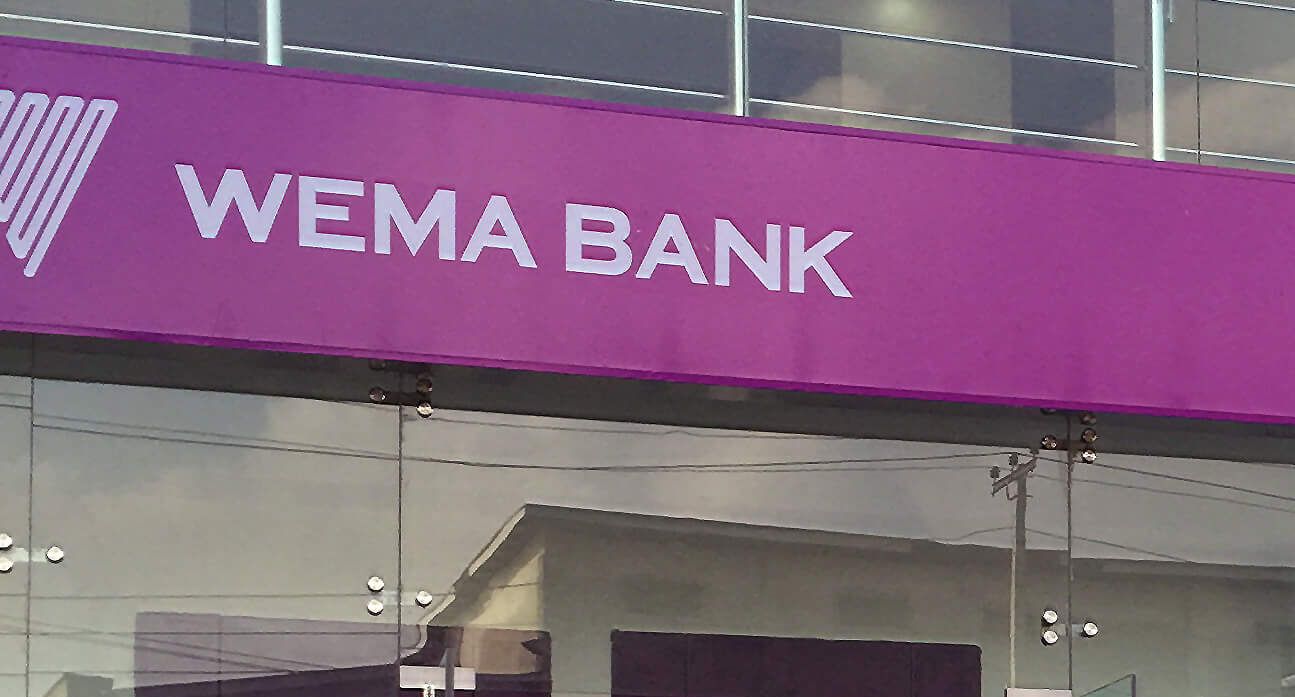
Wema Bank Plc has reported a strong financial performance for the first half of 2026, with profit after tax rising by about 50 per cent to N131.37 billion, driven by robust growth in interest income and improved net interest earnings despite a decline in fee-based income.
The lender’s unaudited financial statements for the six months ended June 30, 2026, filed with the Nigerian Exchange (NGX), showed that profit after tax increased to N131.37 billion from N87.51 billion recorded in the corresponding period of 2025.
Profit before tax also grew significantly by about 45 per cent to N145.56 billion, compared with N100.59 billion in the same period last year.
The bank’s gross earnings expanded by 36.9 per cent to N415.09 billion, from N303.20 billion a year earlier, reflecting stronger earnings from its core banking operations.
Interest income rose by 42.7 per cent to N342.64 billion, compared with N240.12 billion in the first half of 2025, while interest expense increased to N147.19 billion from N110.90 billion as funding costs remained elevated.
Consequently, net interest income climbed by 51.2 per cent to N195.45 billion, against N129.22 billion in the corresponding period of last year.
After accounting for impairment charges of N831.11 million, the bank reported net interest income after impairment losses of N194.62 billion, compared with N128.69 billion in the first half of 2025.
The lender, however, recorded weaker performance in fee-based businesses. Net fee and commission income declined by about 20.5 per cent to N36.09 billion from N45.38 billion in the corresponding period of 2025.
Trading activities remained resilient as net trading income increased to N21.53 billion from N2.84 billion, while net gains on investment securities stood at N4.16 billion, compared with N1.59 billion recorded a year earlier.
Other operating income also eased to N10.68 billion from N13.26 billion.
Overall, operating income rose by 39.3 per cent to N267.07 billion, up from N191.77 billion in the first half of 2025.
On the cost side, personnel expenses increased to N42.85 billion, while depreciation and amortisation amounted to N9.05 billion. Other operating expenses rose to N60.61 billion, reflecting continued investments in technology, business expansion and operational infrastructure.
The bank’s balance sheet also strengthened during the review period.
Total assets grew by about 13.5 per cent to N5.76 trillion as of June 30, 2026, from N5.07 trillion at the end of December 2025.
Loans and advances to customers increased to N2.16 trillion from N1.78 trillion, underscoring continued credit expansion to businesses and individuals.
Investment securities rose to approximately N1.42 trillion, compared with N1.34 trillion at the end of 2025.
Customer deposits expanded to N4.00 trillion from N3.73 trillion, reinforcing the bank’s strong deposit mobilisation strategy and providing additional funding for lending activities.
Shareholders’ funds also improved significantly, rising to N700.45 billion from N620.47 billion at the end of December 2025, supported by retained earnings generated during the period.
Cash and cash equivalents closed the period at N1.03 trillion, up from N940.81 billion six months earlier, strengthening the bank’s liquidity position.
Basic earnings per share rose to 654.92 kobo, compared with 816.73 kobo reported in the corresponding period of 2025.