









Nearly a month after schoolchildren and teachers were rescued from kidnappers in Oyo State’s Oriire communities, classrooms have reopened and routines have returned. But beneath the appearance of normalcy, fear, grief and trauma continue to shape everyday life.
By Oluwapemi Bamidele
On the road into Ahoro Dada community, what strikes a visitor is not what is there, but what is missing.
Long before the village comes into view, traffic thins. The chatter that usually animates rural roads in southwestern Nigeria, children racing home from school, traders balancing wares on motorcycles, farmers returning from their fields before dusk dissolves into an uneasy quiet.
Thick vegetation flanks the winding road, which passes scattered settlements that appear untouched by disaster. There are no collapsed buildings, no charred classrooms, no visible reminders that only weeks earlier, this landscape became the centre of one of Oyo State’s most traumatic school abductions in recent history.
Related Posts:
- From Borno to Oriire: 2,573 abducted in 31 violent Nigerian school attacks over 12 years
- FULL TEXT: Dapo Olorunyomi’s lecture at Ajayi Crowther University on Nigerian journalism
- As Nigeria savours WAFCON, AfroBasket wins, data shows many sportspersons died in road crashes in Q2 2025
- Unsafe, Unprotected: Oyo schoolgirls suffer in silence over lack of menstrual facilities
Then the village appears. At the end of that quiet road, the village comes into view.
Children in white and black uniforms stream out of school compounds, their laughter briefly rising above the hum of motorcycles. Beneath wooden sheds, women peel cassava with practised hands as smoke curls from iron pots where garri slowly roasts.
From a distance, Ahoro Dada looks like countless farming communities scattered across Nigeria’s southwest, a place where life follows familiar rhythms and tomorrow is expected to resemble yesterday. But that impression does not hold for long. Ask about the schools, and conversations slow. Mention the children, and smiles disappear almost instinctively.
The villagers no longer need dates to remember what happened as time there has been divided into two parts: before the gunmen came, and after.
How it happened
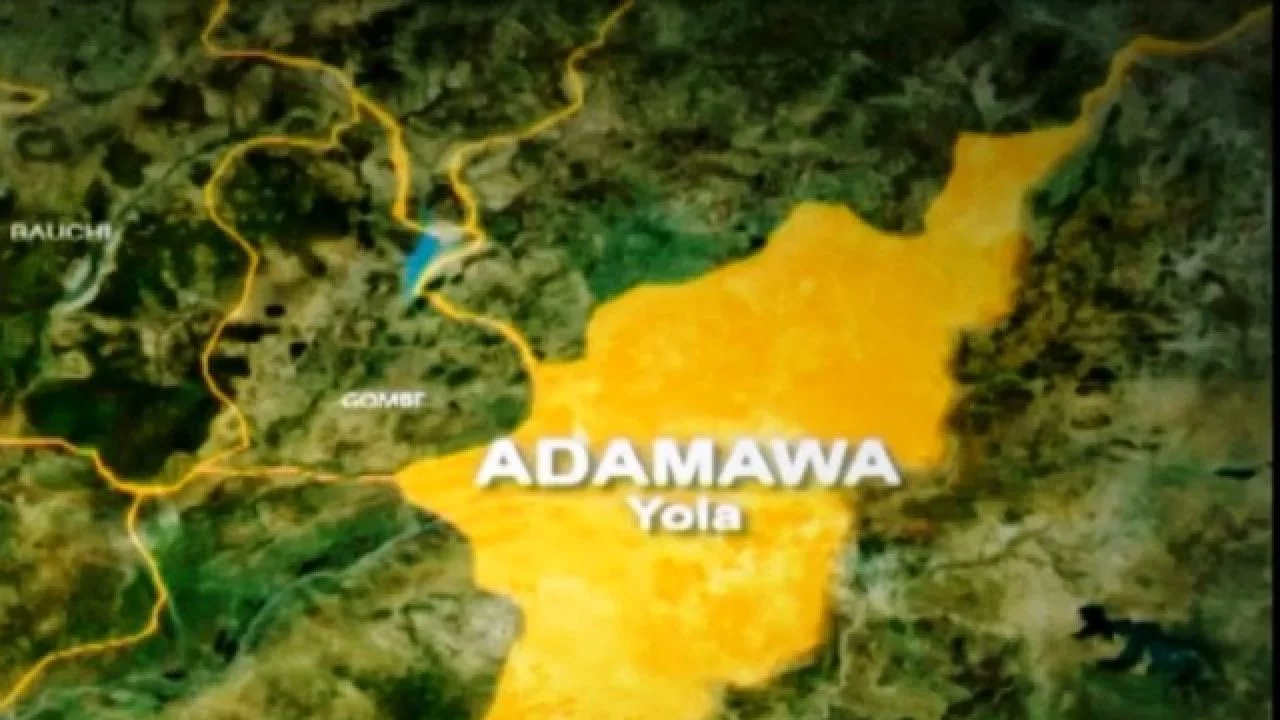
Recall that on 15 May, terrorists abducted 46 persons, including pupils, teachers and a two-year-old from Community High School and Primary School, Ahoro-Esiele and First Baptist Nursery and Primary School, Yawota, all in Oriire Local Government Area of Oyo State.
Hours after the abduction, videos began circulating online showing some of the abducted teachers speaking under duress from what appeared to be a forest location.
Amid growing tension, authorities and media reports confirmed the beheading of one of the abductees, Michael Oyedokun, a Mathematics teacher taken from Community High School during the attack. His killing sparked widespread outrage, protests and renewed fears for the safety of other victims still in captivity.
The attack did leave families wondering whether they would ever see their children and family members again. It ruptured the quiet confidence on which rural life depends – the belief that children could walk to school each morning and return home safely before sunset.
For weeks, that confidence disappeared. School compounds fell silent as parents refused to send their children back into classrooms that had suddenly become symbols of danger.
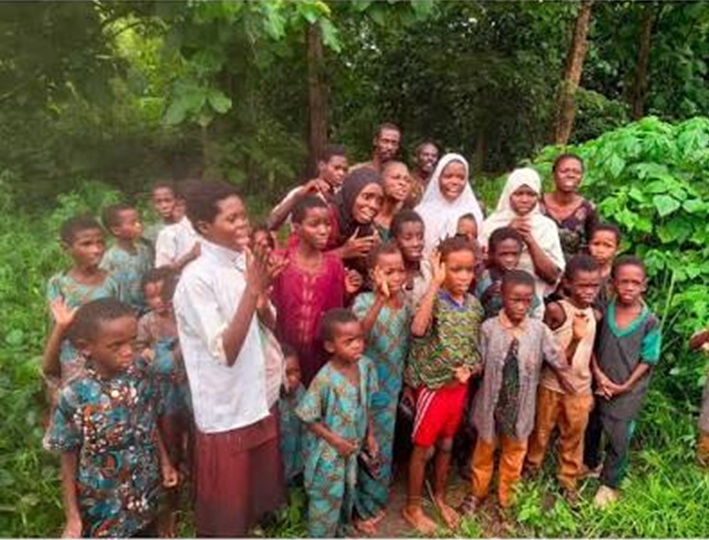
The abducted victims regained their freedom after 56 days in captivity following coordinated efforts by the Federal Government and the Oyo State Government. Their release was greeted with widespread relief across the country.
Families who had lived between hope and despair embraced children they feared they had lost forever. The Nigerian government commended the military and other security agencies for the successful operation. Messages of thanksgiving poured into churches, mosques and social media timelines.
However, what this reporter discovered after travelling through Ahoro Dada, Yawalta and Esiele suggests that freedom was only the beginning, what remained was not just recovery, but the slow, painful struggle to rebuild lives fractured by 56 days of captivity.
The children returned, fear returned with them
“My children will never go back to school.” Those were Michael Ojo’s words. They are spoken without anger, almost without emotion. Their quietness is what makes them difficult to forget.
Mr Ojo whose grandchildren were among the abducted pupils stands outside his modest home watching women peel and fry garri. Though nothing about his appearance suggests the turmoil that has reshaped his family, every decision he now makes revolves around a single determination, that his children will never go to school again.
His wife has temporarily left for the community. Unable to endure the memories of the incident, she left with her daughter-in-law and four grandchildren shortly after they returned from captivity while Mr Ojo remained behind.
“I dropped them off that Friday morning. Only a few hours later, we started hearing gunshots. We rushed out only to hear that they had taken my four grandchildren and daughter-in-law into the forest,” he says.
What frightened him the most, he explains, was not simply the possibility that another attack might happen. It was the knowledge that every walk to school would now begin with fear. He remained behind, tending the same farmland his father cultivated before him.
The graves of his parents are there. His family history is rooted in the soil. Leaving, he says, would feel like abandoning not only his home but everyone who came before him. Mr Ojo still calls the place home. He simply no longer believes it is where children should grow up.
His story repeats itself across Oriire in different forms.
Some families have left permanently. Others have sent their children to live with relatives in larger towns. A few continue to stay, hoping that the presence of security personnel and renewed government attention will prevent another attack.
Almost every household, however, now measures safety differently than it did before the kidnapping. In these communities, fear has quietly become part of ordinary life.
Fear lingers in classrooms
An Economics teacher, Oladosu Gbolagbade, riding home after the day’s lessons, slows his motorcycle when asked how school has been since classes resumed. He smiles politely before pausing for several seconds.
“The children are back,” he says eventually. “But nobody can honestly tell you that everything is normal.”
Attendance is gradually improving, Mr Oladosu explains, but parents remain deeply anxious. Some accompany younger children to school every morning and return long before closing time to wait outside the gates.
According to him, the teachers themselves have not escaped the psychological burden. Many still replay the events of the kidnapping in their minds. Every unfamiliar motorcycle approaching the school compound attracts attention, as sudden noises interrupt lessons.
Conversations about security have become almost as frequent as conversations about Mathematics or English. “We teach,” he says quietly. “But fear teaches us.”
Schools may reopen because their buildings remain standing, but communities reopen much more slowly.
Childhood after captivity
A short walk into Yawalta, women gather beneath makeshift shelters to process cassava harvested from nearby farms. Knives scrape against peeled roots as firewood crackles beneath heavy iron pans. Laughter occasionally rises over the work, then fades into the steady rhythm of cassava being turned into garri.
Among them sits a grandmother, Adeyemi Grace, with her four-year-old granddaughter, Monsuru Taiwo.
The little girl notices unfamiliar visitors almost immediately. Before anyone could introduce themselves, she ran into the bosom of her grandmother.
“It has been like this since they came back,” her grandmother sighs.
Several minutes later, Mrs Grace gently soothes the child as she clings tightly to her grandmother’s wrapper, refusing to make eye contact. Throughout the weeks of captivity, the grandmother carried a burden she believed was too heavy to share.
Her daughter, the child’s mother, lives across the border in the Republic of Benin. Every telephone call became an exercise in restraint. “I never told her,” the old woman says softly.
“I couldn’t tell a mother that her child had been kidnapped. If anything had happened to that little girl after I told her, what would I have said?”
Instead, she prayed. She waited and the child survived. Only after the rescue did she finally reveal what had happened.
Yet survival has not restored the carefree confidence that once defined her childhood. Now, unfamiliar faces often trigger panic before curiosity. No physical examination can measure that kind of wound.
But every time she runs from strangers, her grandmother is reminded that survival and healing are not the same thing.
Across Oriire, stories like hers have become quietly familiar.
More tales
The forest still follows Bello Hassan. Not in the way forests usually do through the smell of damp earth or the memory of towering trees but in flashes that interrupt ordinary life. It returns when rain begins to fall at night. It returns when he hears a motorcycle approaching too quickly. It returns in the silence that settles over him whenever anyone asks what happened during the weeks he spent in captivity.
At 15, Bello speaks with the composure of someone much older, yet every pause in his story reveals a boy still trying to understand what he survived.
The forest, he says, was not merely a place where they were hidden. It became a world of its own, cut off from time and governed entirely by men carrying rifles. Days blended into nights until many of the children could no longer tell how long they had been there.
When rain fell, there was nowhere to run. The children gathered beneath pieces of nylon provided by the kidnappers, pressing their bodies against one another in a desperate attempt to keep warm.
Water soaked through their clothes, turning the forest floor into cold mud that clung to their feet. By morning, they resumed walking as though the night had never happened. Some were too exhausted to speak. Others cried quietly until there were no tears left.
Bello recalls that food came in familiar staples- rice, cooked sometimes by the kidnappers and at times by the captives themselves. Some days they ate almost nothing. On others, they shared whatever little they were given, learning quickly that survival depended as much on one another as it did on luck.
While in captivity, older children comforted younger ones. Teachers tried to calm frightened pupils even as they struggled with fears of their own. No one knew where they were being taken or whether they would ever return home.
The screams they could never explain
When Bello slowly lifts his shirt, faint scars remain visible across his back and shoulders. They are healing now, but they have not disappeared. They are reminders that rescue did not erase captivity. It merely brought it to an end.
Then there were the moments Bello finds hardest to describe. From time to time, one of the teachers would be ordered to stand up and follow the gunmen deeper into the forest.
The children watched silently as familiar faces disappeared between the trees. Minutes later, they would hear screams.
No explanation followed. No one dared ask questions. Even children understand what loud screams mean.
“After some time,” Bello says quietly, “We stopped looking at one another whenever it happened.”
His voice fades before he continues. There are memories, it becomes clear, that language cannot fully carry.
His father watches from a few metres away. There is pride in the way he looks at his son, but also something heavier, an unmistakable guilt shared by many parents in Oriire who have spent weeks asking themselves whether there was anything they could have done differently.
He attended the same school decades earlier. The classrooms where his son was abducted are the same ones where he learnt to read and write, where teachers first convinced him that education could offer a future beyond subsistence farming.
Now those classrooms carry a different history.
Many parents, he says, have quietly concluded that they cannot take such a risk again. Some have moved their children to schools in larger towns. Others have sent them to relatives. A number have left the community altogether, abandoning homes their families have occupied for generations.
He understands their decision but he has reached a different one.
“If we allow this school to die,” he says, looking towards the direction of the school, “then the kidnappers have achieved something even bigger than taking our children.”
His belief is simple, though not naive. He knows that reopening classrooms cannot erase trauma. He knows parents cannot simply be asked to forget.
But he also believes that allowing fear to permanently close the school would hand the gunmen a victory extending far beyond the weeks they spent in captivity. Education, he says, must outlive violence.
Two fathers, two different views
Mr Ojo understands why some parents have returned their children to school. He simply cannot make the same decision. For him, every school morning now carries the memory of the day his grandchildren disappeared into the forest.
His family survived but survival has altered what safety means.
“My grandchildren will never go back to that school,” he says quietly. There is no bitterness in his voice.
He does not condemn other parents for choosing differently nor does he pretend that leaving the village is easy. His roots remain there and the land he farms belonged to his father.
His memories are buried alongside generations before him.
But when asked whether he would ever allow his grandchildren to return to school in Ahoro Dada, his answer does not change. “No.”
Mr Ojo and Bello’s father are not contradicting each other but responding differently to the same wound. While one chooses protection, the other chooses resistance. Both are trying, in the only ways they know how, to keep their families safe.
“My husband left three children”
Though the forest is no longer visible, its shadow is. Violence did not end when the captives came home, it simply changed shape. Instead of armed men, it appears in nightmares; instead of empty classrooms, it lingers in children who have forgotten what safety feels like.
For many families, healing has become a slower journey than rescue and unlike rescue, healing attracts no television cameras. Also, not every family in Oriire welcomed someone home.
When reports emerged that security forces had successfully brought the captives home, the family of John Olaleye, another teacher killed in captivity, remained depressed. Without his remains, there has been no funeral, no final prayers and no grave where his children can mourn the father they continue to ask about.
His widow, simply identified as Mrs Olaleye speaks with the exhaustion of someone whose grief has not yet been given permission to rest.
“My husband left three children,” she says, asking for support to raise three children whose lives changed the morning terrorists walked into their father’s workplace.
Healing beyond survival
The Chief Medical Director of the Ladoke Akintola University of Technology (LAUTECH) Teaching Hospital, Olawale Olakulehin, a professor, says the psychological consequences of traumatic events often persist long after the physical danger has passed.
Children exposed to violent experiences, he explains, may continue to struggle with fear, anxiety, nightmares and emotional withdrawal even after returning to familiar surroundings.
“Recovery, therefore, cannot be measured solely by rescue,” he says. “It must also include deliberate efforts to restore emotional wellbeing.”
According to him, without appropriate psychological support, trauma can quietly shape how children learn, relate to others and understand the world around them.
He stresses that healing requires patience. “Families need reassurance. Schools need support. Communities need to recognise that invisible wounds are often the longest to heal. The children may have come home, but their minds are still finding their way back.”
As evening approaches, the roads begin to empty again. Women gather the last trays of garri as farmers return from their fields. Children walk home with exercise books tucked beneath their arms.
At first glance, everything appears ordinary. The television cameras have gone. The protests have ended. The headlines have faded. From a distance, life seems to have resumed.
The children came home, but childhood did not.
Source: Development Reporting