






…Urges youths to quit ‘comment section’ for politics
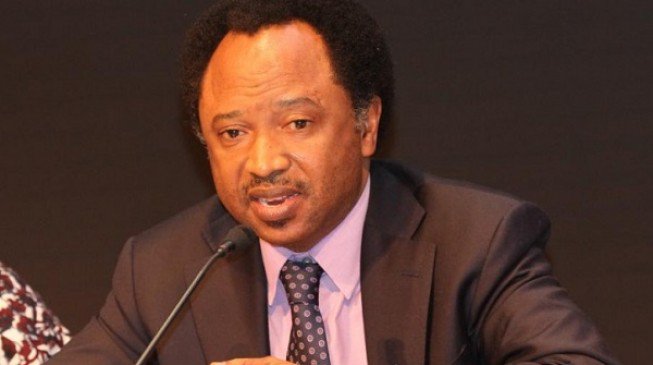
Former Senator, who represented Kaduna Central Senatorial District in the 8th National Assembly, Shehu Sani, has said Nigeria’s biggest deficit is not in oil, minerals or population, but in visionary leadership and citizens’ willingness to sacrifice for national progress.
Sani made this assertion while speaking in Abuja during activities marking the seventh anniversary of Prof. Abubakar Sulaiman as Director-General of the National Institute for Legislative and Democratic Studies, NILDS, stressing that the country must move beyond blame and invest in governance capacity.
“Nigeria has abundant human and natural resources. What we need is visionary leadership and the willingness to sacrifice for sustainable development and progress. Resources without direction produce waste. Leadership converts resources into results,” he said.
The event also featured the unveiling of a book documenting NILDS’ evolution and contributions to democratic development over the past seven years, with a keynote titled “Strengthening the Legislature Through Capacity Building: A Decadal Assessment of the National Institute for Legislative and Democratic Studies.”
Sani’s central message was to Nigerian youths, whom he urged to abandon “armchair activism” and join formal politics in order to practically make meaningful contributions towards national development.
“You cannot take political power from the comment section. If you want to change the system, you must be in the system. Social media can amplify voices, but it cannot pass budgets or make laws,” he pointed out.
He asked young Nigerians to use institutions like NILDS for research, documentation and mentorship, describing the institute as “the engine room of the National Assembly for democratic governance” which has expanded its relevance beyond lawmakers to the general public.
“The Professor has transformed this institute, made it result-oriented and strengthened parliament through research, innovation, partnerships and intellectual leadership,” he said of Sulaiman.
The former lawmaker also criticised Nigeria’s political parties for lacking ideological differences, saying: “Both ruling and opposition parties largely pursue similar philosophies despite their persistent political rivalry,” he noted.
“That is why governance often feels like a relay race with the same baton, only different runners.”
On national history, Sani called for greater appreciation of Nigeria’s sacrifices. “Nigeria has sacrificed immensely for democracy, freedom and African liberation. We should know our history and reject narratives that diminish our country’s contributions. A nation that forgets its past cannot defend its future.”
He charged Sulaiman to sustain NILDS’ youth engagement programmes, saying: “This institute should become a factory where future leaders are prepared to transform Nigeria responsibly”.
In his remarks, Prof. Sulaiman urged youths not to abandon democracy out of frustration. He acknowledged disillusionment over the slow pace of democratic dividends but warned that withdrawal would worsen the situation.
“If you condemn the system and refuse to participate in it, you cannot change it,” he said. “Activism has its place. Many of us were activists before joining politics. But there comes a time when you must move beyond protest and become part of the decision-making process. You cannot reform a system from the outside alone.”
Sulaiman encouraged young people to join political parties, contest elections and prepare for leadership, saying: “If our generation could make it despite the challenges we faced, today’s young Nigerians can also succeed.
The future of democracy depends on a new generation willing to prepare for public service rather than limit engagement to social media criticism.”
Reflecting on his tenure, the DG said his proudest achievement was human capital development, noting: “I call it my staff-centred policy. People celebrate buildings and reforms, but they forget the drivers, the gardeners and the cleaners who keep the institution running”.
The anniversary ended with the unveiling of a book on NILDS’ history. Reviewer Dr Adeyemi Fajingbesi, a NILDS consultant, said the publication preserves institutional memory for scholars, legislators and policymakers.
He traced NILDS’ journey from the 2003 Policy Analysis and Research Project to what he described as Africa’s premier legislative institution.