






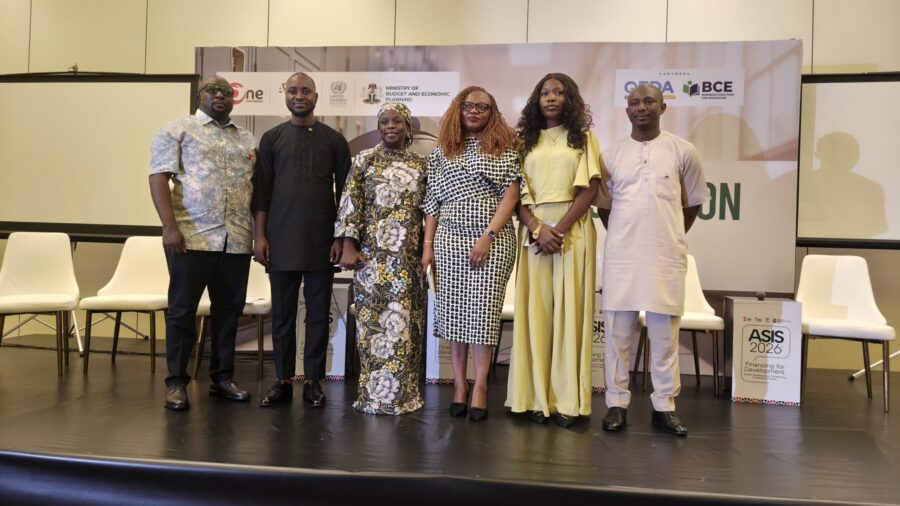
Panelists at the Africa Social Impact Summit (ASIS) 2026 have urged the government, the private sector and individuals to increase investment in early childhood development (ECD), especially for children from birth to age eight in crisis-affected communities.
The discussion took place during a session titled “How do we finance Early Childhood Development?” moderated by the Education Technical Adviser at Save the Children Foundation, Peter Fajuno.
The panel featured Zara Goni, Senior Social Development Specialist at the World Bank; Samuel Ajayi, Programme Manager (Education) at Sterling One Foundation; Tobi Ransomed, Education Adviser at Plan International; Priscilla Ibadin, an ECD Youth Ambassador at Moving Minds Alliance; and Arome Agenyi, National Coordinator of the Nigerian Coalition on ECD in Crisis.
Opening the session, Mr Fajuno drew on his 15 years of humanitarian experience in insurgency-affected communities. He said children displaced by conflict in the North-East and North-West often grow up without access to basic necessities.
Related Posts:
“There are children who, believe you me, have never held a toy,” he said.
Mr Fajuno noted that science shows 90 per cent of the human brain develops by the age of five, yet many children spend these critical years without access to adequate nutrition, healthcare or early learning opportunities.
World Bank highlights economic returns
Ms Goni said World Bank research shows that investing in early childhood development strengthens human capital and boosts productivity. Every naira invested in the sector, she said, generates significant economic and social returns.
She explained that children who receive quality early childhood support are more likely to become productive members of society, helping to reduce crime, unemployment and other long-term social costs.
According to her, investing in children’s early years also helps break the cycle of poverty by giving children from disadvantaged backgrounds a stronger foundation for future success.
Ms Goni stressed that no single donor could fund the response alone, urging governments, development partners and humanitarian actors to work together to reach children in conflict-affected communities.
She added that the World Bank recently launched the Sustainable Solutions for IDPs and Host Communities project to address the needs of internally displaced children.
Private sector seeks strategic investment
Mr Ajayi of Sterling One Foundation said the private sector has long invested in development initiatives, but much of the support has focused on providing supplies rather than measuring outcomes.
He noted that companies are increasingly asking what impact their investments are making and should begin to see education as a strategic investment rather than simply an element of corporate social responsibility.
According to him, Sterling One Foundation is encouraging businesses to view investment in children as good business, arguing that a well-supported child is more likely to become a productive worker and consumer.
Citing a Nobel Prize-winning economist, Mr Ajayi said returns on investment in early childhood development are estimated at between 7 and 13 per cent annually.
Beyond financial returns, he added, investing in children leads to lower security costs and creates a more stable business environment.
Plan International calls for holistic support
Ms Ransomed said funding for children in crisis settings should extend beyond education.
She noted that children affected by conflict also face malnutrition, protection risks and inadequate healthcare, making it essential to provide integrated support for both children and their parents or caregivers.
According to her, malnutrition affects a child’s ability to learn and concentrate in school while also increasing the risk of child mortality.
She observed that interventions have often been implemented in isolation instead of through coordinated approaches, adding that this must change.
Youth ambassador advocates community-led solutions
Ms Ibadin of Moving Minds Alliance said many young people who grew up in crisis settings eventually become advocates for change.
She argued that children’s needs differ across communities and that young people from those communities should help shape decisions on how funding is allocated.
She called for investment in community hubs that provide maternal healthcare, prenatal care and support for children from birth through early childhood, rather than focusing solely on education.
Responding to a question on the cost of failing to invest in early childhood development, Ms Ibadin said inadequate investment during a child’s formative years contributes to youth unemployment later in life.
She also identified weak monitoring of funds and the tendency to treat early childhood development solely as an education issue as major obstacles to increased investment.
Coordinator raises concern over funding gap
According to Mr Agenyi, National Coordinator of the Nigerian Coalition on ECD in Crisis, Nigeria has 3.6 million displaced people and about 4.9 million children living in humanitarian settings who urgently need support.
He noted that only one per cent of humanitarian and development funding in Nigeria currently goes to early childhood development.
Mr Agenyi urged the private sector to see investment in young children as an investment in its future workforce and customer base.
He also called on governments to move beyond announcing budget allocations and demonstrate how much funding is actually released for the sector.
He further urged individuals to recognise their role as stakeholders, arguing that the country’s growing insecurity is partly linked to generations that lacked adequate support during their early years.
Panel addresses funding barriers
During the question-and-answer session, an audience member asked why applications for state support are often unsuccessful without the involvement of professional consultants and whether state governments could divert funds allocated for education.
Responding, Ms Ransomed said the process should begin with stronger collaboration among stakeholders and greater transparency in the management of public funds.
She cited the partnership between the Lagos State Government and the Education Outcomes Fund, which links funding to measurable results.
Mr Agenyi added that his organisation and other partners are willing to provide technical support to public officials seeking to strengthen their capacity.
He reiterated that funding should not be measured only by budget allocations but also by the proportion of approved funds that are eventually released.
Youth voices still overlooked
Rapporteur at Sterling One Foundation, Ifunanya Ottih, submits that young people are often excluded from conversations that directly affect their future.
She said a lack of trust between older stakeholders and young people continues to limit meaningful collaboration.
Ms Ottih added that young people increasingly express their experiences through art, poetry and social media, and these platforms should be recognised alongside policy documents when designing early childhood development interventions.
Panelists reaffirm commitment
Speaking separately after the session, Mr Ajayi said the private sector’s challenge is not a lack of interest but the need for more coordinated engagement. He added that Sterling One Foundation will continue mobilising companies through the Business Coalition on Education.
Ms Ransomed said failing to invest in children’s early years carries significant long-term consequences, as children who miss out on quality early childhood support are less likely to reach their full potential. She called on governments, private companies and philanthropists to increase funding for the sector.
Mr Agenyi also assured that Moving Minds Alliance remains committed to ensuring that children in humanitarian settings receive appropriate care and early learning opportunities, while urging sustained commitment from government and private sector stakeholders.
Source: Development Reporting