









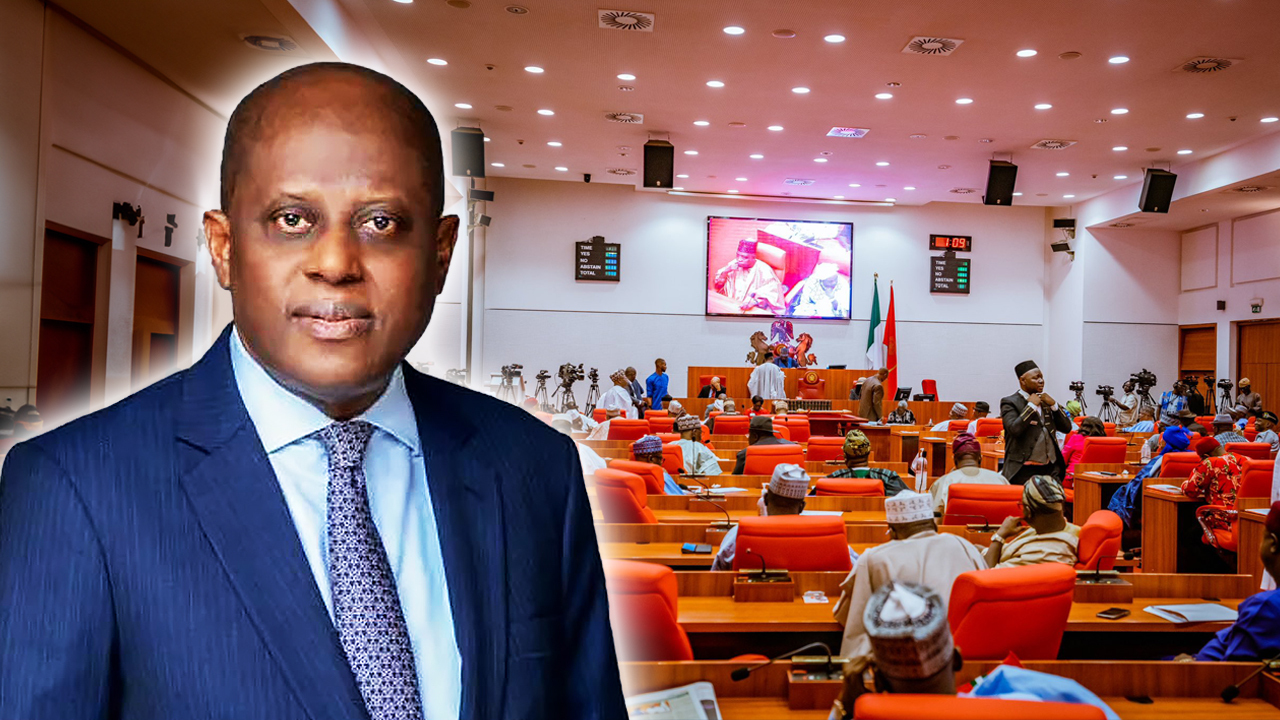
The Central Bank of Nigeria (CBN), on Wednesday, announced a rise in Nigeria’s external reserves to $52.73 billion as of July 9, 2026, but Senators immediately pressed the CBN Governor, Olayemi Cardoso, on why the gains are not reflecting in inflation, lending rates and food prices.
Cardoso told the Senate Committee on Banking, Insurance and Other Financial Institutions that gross reserves grew by 7.9% from $48.88 billion in January 2026.
He said net reserves also jumped to over $40 billion from $3.99 billion in 2023, attributing it to “restoration of confidence” in the FX market.
He projected a positive outlook for the second half of 2026, citing expected moderation in inflation on the back of tight monetary policy, improved policy coordination and exchange rate stability.
On banking, Cardoso said the recapitalisation programme mobilised N4.65 trillion in fresh capital in March, calling it one of the most successful capital-raising exercises in Nigeria’s history.
According to him, 72.55% came from domestic investors and 27.45% from foreign investors. He added that 33 banks have met the new capital requirements.
Inflation, he noted, dropped to 15.06% in February, prompting the MPC to cut the Monetary Policy Rate from 27% to 26.5%, before rising again to 15.93% in May due to “external shocks.”
Committee Chairman, Senator Adetokunbo Abiru, APC, Lagos East, commended the CBN for exchange rate stability and the recapitalisation exercise, but warned that bigger bank balance sheets mean little if credit remains expensive and scarce.
“Recapitalisation should not become an end in itself. Ultimately, the true measure of a stronger banking system lies not merely in larger balance sheets but in its capacity to mobilise savings efficiently and channel affordable credit to productive sectors of the economy,” Abiru said.
He expressed concern that despite the N4.65 trillion raised, there are reports of moderation in private sector credit. He said agriculture, manufacturing, infrastructure, technology and SMEs should be the primary beneficiaries, not just government securities and FX trading.
Other lawmakers questioned the disconnect between the headline reserve figures and lived realities. With inflation still above 15% and food prices high, they asked how a 900% jump in net reserves since 2023 has helped households.
The CBN also disclosed that engagement is ongoing with the few banks yet to meet the new capital requirements, with assurances that depositors’ funds will be protected.
After the public session, Senator Abiru announced that the committee would go into a closed-door meeting with Cardoso and his team to probe further on inflation drivers, lending to the real sector, and FX management.
The CBN’s optimism on reserves comes amid continued public frustration over cost of living, raising questions about whether monetary gains are translating into relief for Nigerians.