








The Major Energies Marketers Association of Nigeria (MEMAN) and the Nigerian Midstream and Downstream Petroleum Regulatory Authority (NMDPRA), has said Nigeria will greatly benefit with the adoption of cleaner fuel.
The identified E-10 which is fuel blended with 90% of fuel and 10% of ethanol as an innovation that has been adopted by some developed and developing economies.
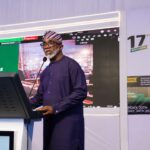
Chief Executive Officer/Executive Secretary, MEMAN, Mr Clement Isong, and Executive Director Health, Safety, Environment and Community (NMDPRA), Dr. Mustapha Lamorde, spoke at a workshop titled: “From Farm to Fuel: Understanding the Ethanol-Blended Option.” It was organised by MEMAN in partnership with the United States (U.S.) Grains & Bioproducts Council in Lagos, according to a statement on Sunday.
Isong said the adoption of E-10 will present great opportunities of economic acceleration, job creation, agricultural and industrial revolution to Nigeria.
He noted that the country suffers from high post harvest losses of cassava, adding that ethanol blended fuel will make use of cassava that would have been wasted and create prosperity for farmers and other people in allied agriculture preoccupation.
Ethanol Technical Consultant and Advisor, U.S. Grains & Bioproducts Council, Rowena Torres-Ordonez, said E-10 is safer, more environmentally friendly and cheaper. She noted that some countries such as US, Brazil and some developing economies have adopted E-10.
Lamorde, said the workshop came at the pivotal moment in Nigeria’s energy landscape.
He said: “As our nation’s trust to balance energy stability, affordability, economic growth, and environmental sustainability cleaner transportation of oil has become an essential component of our energy transition strategy. The ethanol blended fuel , particularly E-10, presents a practical and globally proven pathway towards reducing initial oil strength in domestic energy resilience.
“The DIA Trade Center has provided the legal and institutional framework for a more competitive position as a sustainable background industry. Within this framework, the NMDPRA is committed to creating an enabling regulatory environment that promotes innovation, ensures real quality, safeguard public health and safety, protect the environment and express investors that are conscientious.”
He stated that around the world, ethanol-blended oil has become an integral part of transportation systems. He added that countries across North and South America, Europe and Asia, have successfully demonstrated that it can reduce greenhouse gas emissions, improve commercial efficiency, enhance energy security, and improve and enhance stimulant agricultural and industrial oil chains.
According to him, Nigeria stands to derive similar benefits through the responsible implementation of the ethanol blending.
He said that beyond this, the environmental advantage it can produce represents significant economic opportunities, and has the potential to stimulate investment in oil fuel production, create jobs across agricultural and agricultural sectors.
He added that it will increase Nigerians’ energy mix, reduce dependency on imported fuel companies, and contribute meaningfully to the national climate commitment.
Lamorde said: “I am pleased to inform you that Nigeria has moved beyond disclosures on E-10 adoption to practical implementation. The NMDPRA is currently coordinating the National E-10 Final Program in close collaboration with stakeholders, including MEMAN, Standard Organisation of Nigeria (SON), Nigerian National Petroleum Company (NNPC) retail and the National Agency for Food and Drug Administration and Control (NAFDAC), and other relevant public and private sector institutions.
He said that the preparations for the final program were now at their final stages. He added that subject to the completion of the remaining implementation activities, the pilot and committee in Abuja, E-10 pilot, was meant to evaluate fuel quality, logistics and distribution systems, vehicle compatibility, infrastructure readiness, consumer acceptance, operational safety, environmental performance, and the effectiveness of the regulatory framework.
Lamorde said: “The final program is a landmark initiative for Nigeria’s downstream petroleum sector. The knowledge and data generated will provide the technical and regulatory basis for informed policy decisions and support the first nation-wide rollout of E-10. We also demonstrate the follow-up collaboration between government institutions, industry, corporations, development partners, and technical expertise for the global initiative, energy solutions.
“The idea for the commitment and other partners in the institution for the commitment and professionalism, technical expertise, we have brought to this initiative. The spirit of collaboration that has characterized this project gives us confidence that the final program will achieve the intended objective and lay the foundation for a successful national internal planning program.
“However, successful implementation requires more than infrastructure and regulation. It requires sustained policy engagement of both technical standards and consumer education, continuous monitoring, and strict access to quality and safety of planning. There might be workshops such as this idea for invaluable funding technical capacity, fostering knowledge, exchange, and addressing legitimate concerns regarding the project.”
He added: ”As it relates to us, our objective is not merely to introduce a new first education, but to ensure that if a deployment is safe, technical standards, economic, and environment is sustainable and benefits beneficial to all Nigerians. The authority remains committed to working with all stakeholders to achieve this noble objective through transparent regulation, technical excellence, and effective collaboration.
”I encourage participants to make the most of today’s discussion by sharing experiences, identifying practical solutions, and developing recommendations that will strengthen Nigerians’ readiness for the successful adoption of E-10 and other technical technologies.”