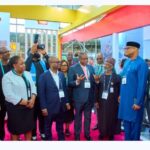







The Federal Government has inaugurated a Ministerial Advisory Committee made up of independent economic experts to strengthen the quality of economic decision-making and improve the implementation of reforms.
Speaking at the inauguration in Abuja, the Minister of Finance and Coordinating Minister of the Economy, Mr. Taiwo Oyedele, said the committee was established to provide independent, evidence-based advice that would help government identify economic risks early, improve policy execution, and ensure reforms deliver tangible benefits to Nigerians.
He noted that Nigeria’s economic challenges require broader perspectives beyond government institutions.
“Nigeria’s economic landscape is intricate, and our fiscal space is constrained. Every policy lever we pull affects multiple stakeholders in ways that are not always predictable,” Oyedele said.
According to the minister, while governments often face pressure to introduce new initiatives quickly, policies developed without thorough analysis can create unintended consequences.
He explained that the committee would provide constructive external counsel by evaluating the second- and third-order effects of government policies, identifying emerging risks, drawing on global best practices, and assessing the real impact of reforms on businesses and communities.
Oyedele stressed that the advisory committee would not exercise executive authority or replace the functions of existing government institutions.
“Your role is simply to advise. Your independent perspective will strengthen our decisions and help us remain focused on achieving results,” he said.
He outlined four key areas that will guide the committee’s work.
The first is economic policy advisory, where members are expected to provide data-driven recommendations to support job creation, economic growth, productivity, and revenue generation.
He said achieving the government’s target of seven per cent annual economic growth and building a one trillion-dollar economy by 2030 would require innovative and practical policy ideas.
The second area is public financial management, aimed at strengthening fiscal discipline through improved revenue mobilisation, better public spending, responsible borrowing, and greater transparency.
“We want to strengthen fiscal governance across all government institutions. How we generate revenue, the quality and priority of our spending, responsible borrowing and transparent reporting must improve,” he said.
The third pillar focuses on economic coordination, with Oyedele emphasizing that reforms can only succeed through collaboration among ministries, government agencies, state governments, and the private sector.
The fourth pillar is ensuring that reforms produce measurable improvements in the lives of Nigerians.
“A fiscal reform that looks flawless on paper but fails to improve conditions for Nigerian businesses is not reform. It is disguised bureaucracy,” he said.
The minister urged committee members to remain objective and evidence-driven, challenge government assumptions where necessary, simplify complex economic issues for public understanding, and stay connected to realities on the ground through engagement with businesses and ordinary citizens.
“We need you to challenge our assumptions, point out the trade-offs we may be overlooking and tell us the truth we may not want to hear. Healthy, fact-based disagreement is an advantage,” he said.
Addressing the organised private sector, Oyedele said government alone could not deliver the prosperous economy Nigerians desire, stressing that sustainable growth would depend on private investment, innovation, and job creation.
“The government’s role is to clear the path by creating predictable policies, macroeconomic stability and a functioning rule of law. The rest depends on your investments, your hiring and your willingness to take risks,” he added.
Responding on behalf of the committee, its Chairman and Managing Director of Sterling Bank, Mr. Abubakar Suleiman, assured the minister that members would focus on delivering practical, implementable recommendations rather than lengthy reports.
He said the committee’s role was to complement government’s work by identifying emerging issues, proposing fresh ideas, and serving as a bridge between policymakers and Nigerians.
“We will try to hear what Nigerians are really saying, where they are truly feeling the pain, which policies are working, and then bring that back to you in a way that government can use,” Suleiman said.
He pledged that the committee would provide practical solutions to support government’s efforts to strengthen the economy, improve policy outcomes, and enhance the welfare of Nigerians.