









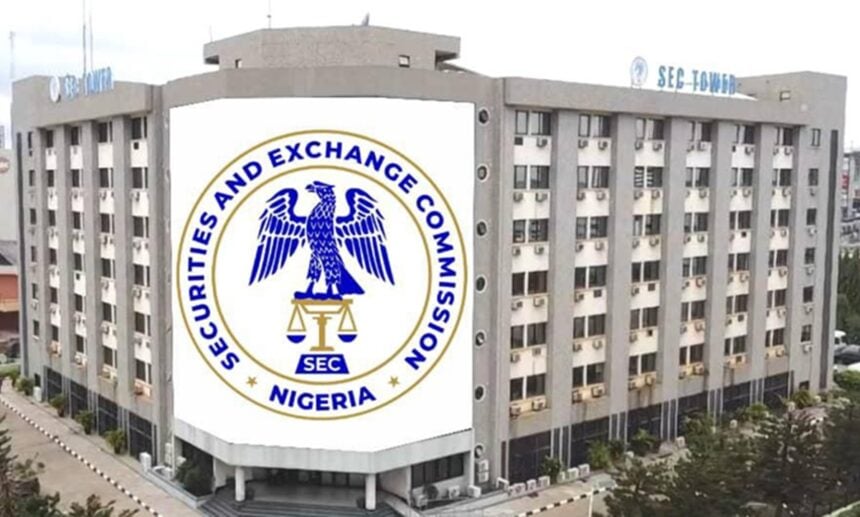
The Director-General of the Securities and Exchange Commission (SEC), Dr. Emomotimi Agama, has urged policymakers to maintain consistent economic policies and strengthen operational resilience as Nigeria seeks to regain Frontier Market status after being placed on the S&P Dow Jones Indices (S&P DJI) 2027 Watchlist.
In a strategy paper titled “Nigeria’s Path to Index Reclassification: A Unified Strategy on Policy Consistency and Operational Resilience,” Agama described the S&P DJI watchlist placement, alongside an ongoing review by FTSE Russell, as Nigeria’s best opportunity in a decade to restore global investor confidence and attract increased foreign portfolio investment.
According to Agama, Nigeria has moved beyond the phase of introducing reforms, with global index providers now focused on the consistent implementation of existing policies and the reliability of the country’s financial market infrastructure under both normal and stressed conditions.
“The reform programme is complete; the evidence programme now begins,” he said, stressing that the country’s priority should be to demonstrate the effectiveness of reforms already implemented rather than introducing new ones.
He noted that S&P DJI acknowledged improvements in Nigeria’s regulatory environment, market transparency, enforcement and integrity.
However, the final assessment will depend on the consistency of policy implementation and the resilience of market operations throughout the observation period extending to the end of 2026.
Agama also highlighted that FTSE Russell’s ongoing review was partly prompted by Nigeria’s successful migration to a T+1 settlement cycle in June 2026, a move that places the country ahead of many frontier and some emerging markets in settlement efficiency.
Although S&P DJI and FTSE Russell use different assessment methodologies, he said both are evaluating key factors such as foreign exchange repatriation, settlement efficiency, regulatory consistency and the reliability of market infrastructure.
The SEC chief warned that policy reversals, discretionary regulatory actions, retroactive directives or renewed restrictions on foreign exchange access could jeopardise Nigeria’s chances of securing Frontier Market classification.
He identified five critical pillars required by global index providers: a stable foreign exchange regime, consistent regulatory enforcement, avoidance of retroactive policy changes, effective coordination among fiscal, monetary and regulatory authorities, and predictable enforcement of investor rights through the judicial system.
On operational resilience, Agama said Nigeria must sustain strong performance under its new T+1 settlement system, ensure efficient foreign exchange repatriation, maintain deep and liquid FX markets, strengthen market infrastructure, support orderly trading during periods of volatility and deliver consistent performance throughout the review period.
To drive the reclassification process, the SEC has proposed establishing an Index Reclassification Steering Committee comprising the Commission, the Central Bank of Nigeria, the Federal Ministry of Finance, the Federal Inland Revenue Service, the Nigerian Exchange, the Central Securities Clearing System and FMDQ.
The Commission also plans to publish a quarterly Reclassification Evidence Pack containing certified data on settlement performance, FX repatriation timelines, market liquidity, infrastructure resilience, regulatory enforcement and dispute resolution. The reports will be submitted to S&P DJI, FTSE Russell and MSCI.
Agama added that the SEC would engage global custodian banks ahead of the third-quarter 2026 survey to address operational concerns before they are reflected in assessments by the index providers.
He cautioned against actions that could undermine Nigeria’s prospects, including foreign exchange restrictions during market stress, uncoordinated fiscal or tax measures, infrastructure failures and negative feedback from international custodians.
Under the implementation roadmap, the SEC plans to establish the steering committee and issue its first evidence report in the third quarter of 2026, followed by technical submissions to S&P DJI and FTSE Russell before year-end and sustained engagement throughout the 2027 country classification review.
Agama expressed confidence that if the proposed framework is implemented consistently, Nigeria’s return to Frontier Market status in 2027 would be driven by “an unbroken, independently certified record of performance” rather than advocacy.