









Mr Aigbovbioise Aig-Imoukhuede, Managing Director of Coronation Asset Management, has said the rally in the equities market during the first seven months of 2026 was mainly fueled by domestic capital, not foreign investors.
Aig-Imoukhuede, who spoke at the H1 2026 Capital Market Review, said the strong performance of the Nigerian Exchange (NGX) equities market reflected a combination of stronger domestic participation, improving macroeconomic stability and growing investor confidence, rather than a return of significant foreign portfolio inflows.
He, however, warned that the impressive market performance must be assessed against a critical question: whether the current momentum represents a sustainable structural recovery or merely a temporary market rally.
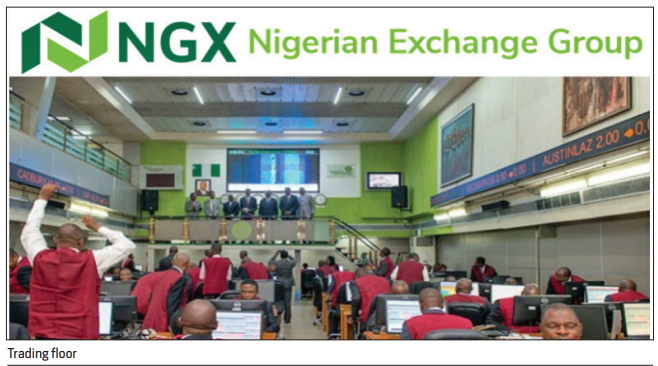
As of the end of July 2026, the NGX All-Share Index had delivered a 57 per cent return, while total market capitalisation expanded by N58.9 trillion to N158.2 trillion within the first seven months of the year.
According to Aig-Imoukhuede, the performance was strong enough to place Nigeria among the world’s top-performing stock markets in dollar terms, citing Bloomberg data which showed that the Nigerian market had outperformed many of the 92 stock exchanges globally.
“These numbers are certainly worth celebrating,” he said, but stressed that the performance also raised questions about the durability of the rally.
“My central argument is simple: the rally we have witnessed is not merely a market event. It reflects a stronger domestic capital base, improving macroeconomic stability and a growing opportunity for long-term investors who position thoughtfully for the second half of the year,” he said.
Aig-Imoukhuede said Nigeria’s improving macroeconomic environment was providing a firmer foundation for capital-market performance, although he cautioned that the economy had not yet reached a point where monetary stability could be described as a launch pad for accelerated growth.
He noted that the Central Bank of Nigeria (CBN) had maintained the Monetary Policy Rate (MPR) at 26.5 per cent for two consecutive meetings following a 50-basis-point reduction from 27 per cent in February.
He described the CBN’s decision to maintain the rate as deliberate rather than indecisive, noting that global uncertainty, renewed tensions in the Middle East and volatility in the domestic inflation trajectory had contributed to the cautious monetary-policy stance.
Headline inflation stood at 15.43 per cent in July, although Aig-Imoukhuede noted that the decline in inflation had not been linear.
He said persistent volatility in food prices showed that inflation in Nigeria was influenced by factors beyond monetary policy, including supply-chain constraints, logistics, agricultural cycles and exchange-rate movements.
“At Coronation Research, our base case remains that the MPR will broadly hold at current levels through year-end. We are not forecasting a dramatic policy pivot. We are forecasting disciplined, data-dependent stability,” he said.
According to him, while monetary-policy stability may not generate headlines, it creates an environment in which long-term capital can be deployed with greater confidence.
However, he stressed that macroeconomic stability alone could not explain the 57 per cent gain recorded by the equities market.
Aig-Imoukhuede said one of the most significant features of the 2026 market rally had been the changing composition of market participation.
He noted that Nigerian equities had not rallied on the back of foreign capital, but were instead supported primarily by domestic investors.
By June 2026, foreign investors accounted for only 12.1 per cent of NGX transaction value, compared with 27 per cent a year earlier.
He said the decline in foreign participation did not mean foreign investors had abandoned Nigeria, pointing out that the value of their portfolios increased modestly from N1.13 trillion to N1.16 trillion during the first half of the year.
“What changed was the scale of domestic participation, which expanded at a far more significant pace of 129.1 per cent,” he said.
The shift, he argued, demonstrated a significant structural change in the Nigerian equities market, with domestic investors emerging as the dominant force behind the market’s performance.
Foreign portfolio investors were also net sellers of Nigerian equities during the first six months of the year despite the broader market rally.
According to Aig-Imoukhuede, a significant portion of foreign capital moved into short-dated government securities offering yields close to 20 per cent.
“From a pure risk-adjusted perspective, that allocation decision was understandable,” he said.
Aig-Imoukhuede identified domestic institutional investors, particularly pension funds, as key contributors to the equities rally following the revision of investment thresholds by the National Pension Commission (PenCom).
He also highlighted the resurgence in domestic retail participation as another important factor supporting market performance.
He rejected the notion that increased domestic participation represented a weakness in the market.
“If anything, this is a sign of market maturity. Markets become more resilient when they are supported by savings rather than speculation,” he said.
However, he acknowledged that the rally had been narrower than the headline market performance suggested, raising the question of whether foreign capital would return and what conditions would be required to attract it.
According to Aig-Imoukhuede, the second half of 2026 should be viewed as a potential re-entry window for foreign investors rather than a period in which the market’s rally is expected to fade.
He said the conditions for renewed foreign participation were strengthening, citing developments around index classification, foreign-exchange liquidity, reserves and corporate earnings.
“First, index providers are paying attention,” he said.
He noted that FTSE Russell was continuing to review Nigeria’s position within its Frontier Market Index framework, while S&P Dow Jones Indices had placed Nigeria on a watchlist for possible reclassification from standalone to frontier market status.
Although neither outcome was guaranteed, he said any change in Nigeria’s classification could have significant implications for international capital flows.
Aig-Imoukhuede also pointed to improvements in Nigeria’s foreign-exchange market.
He said FX liquidity had improved, the naira had strengthened, and reserve accumulation was increasingly supported by more sustainable sources of foreign-exchange inflows.
According to him, these indicators were important to international investors because they provided a measure of the sustainability of exchange-rate stability and Nigeria’s external resilience.
The Coronation Asset Management executive also identified corporate performance as another factor that could support renewed foreign investment.
He said the banking recapitalisation cycle, strong corporate earnings and continued economic reforms were creating a more compelling investment case for Nigeria within the frontier-market environment.
Aig-Imoukhuede argued that the market’s decline in June, which represented the first month of sequential decline during the period under review, should not necessarily be interpreted as a loss of investor confidence.
Instead, he attributed the decline largely to profit-taking by domestic investors following the market’s strong first-half performance.
“Domestic investors were prudently locking in gains after a historic first half,” he said.
He added: “Global capital follows confidence, but domestic capital trades on it.”
According to him, the structural case for foreign investors to return to Nigeria was now stronger than it had been at the beginning of the year.
Looking ahead, Aig-Imoukhuede outlined three principles that he said should guide institutional investors’ capital-allocation decisions during the remainder of 2026.
With the CBN expected to maintain interest rates broadly around current levels and OMO bills reopening to a wider investor base, he said the short end of the yield curve was likely to become increasingly crowded.
He argued that the next opportunity would be in selectively extending duration through quality credit, infrastructure debt and carefully selected fixed-income instruments.
He said Coronation’s position was reflected in its continued commitment to infrastructure financing, particularly in energy and transport, sectors where Nigeria’s long-term capital requirements remained substantial.
Aig-Imoukhuede said a market that had gained more than 55 per cent, supported by domestic flows and significant re-rating in several large-cap stocks, was unlikely to reward indiscriminate investment.
He urged investors to focus on companies with strong earnings momentum, sound corporate governance, liquidity and clear pathways to benefit from renewed foreign participation.
He said potential reclassification decisions by global index providers could generate significant international attention and attract passive capital flows into Nigerian equities.
“The best opportunities are often identified before consensus recognises them,” he said.
He predicted that any major repricing resulting from renewed foreign participation would likely be swift and concentrated in companies with strong liquidity, adequate free float, sound governance standards and robust disclosure practices.
“Those who wait for certainty will almost certainly pay a higher price than those willing to position for probability,” he said.
Beyond investment returns, Aig-Imoukhuede said the Nigerian capital market had a broader responsibility to build trust and strengthen confidence among domestic and international investors.
He argued that Nigeria’s capital markets did not simply need more capital, but also required transparency and institutions willing to be judged by the quality of their thinking and governance rather than merely the size of their returns.
“That is the standard we hold ourselves to at Coronation, and it is a standard that I believe asset managers, market operators, regulators and all participants must hold one another to as this market continues to mature,” he said.
He emphasised the importance of trust in attracting and retaining international capital.
According to him, capital can enter and leave a market quickly, while trust takes years to build but can be lost in moments.
“The long-term success of Nigeria’s capital markets will depend on which of those we choose to prioritise,” he said.
Aig-Imoukhuede described Nigeria’s capital market as being at an inflection point, with the first half of 2026 demonstrating the strength of domestic capital and the second half set to test the confidence of international investors.
He expressed optimism that Nigeria was now better positioned than it had been in recent years to attract both domestic and foreign capital.
“The opportunity before us is not simply to deliver market returns. It is to build a capital market that is deeper, more trusted, more liquid and more globally relevant,” he said.
He called on asset managers, market operators, regulators and other market participants to ensure that Nigeria’s capital market infrastructure and institutions were prepared to receive renewed international investment.
“Our responsibility as firms and as an industry is to ensure that when capital chooses Nigeria, it finds institutions that are prepared, markets that are credible and opportunities that are compelling,” he said.