


By Adejumo Kabir and Dr. Ola Bello
On 15 August 2026, the residents of Osun State, Southwest Nigeria, will elect their next governor in what is expected to be another defining moment for the state’s democratic journey. While election is the cornerstone of representative government, the credibility is measured by more than the eventual declaration of results.
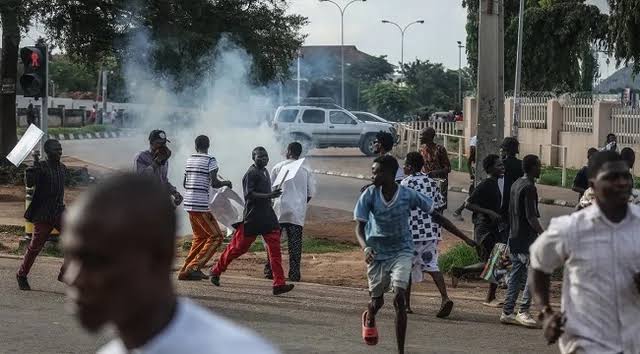
As the election draws closer, Good Governance Africa (GGA) has observed an escalation in political tensions, violent incidents, and acts of vandalism in the state. These incidents have prompted interventions from security agencies, civil society organisations and community leaders, all calling for restraint and peaceful participation. Despite these efforts, the atmosphere remains tense.
The challenge confronting Osun is therefore not simply whether the election will hold on schedule. It is whether democratic institutions can protect citizens’ rights to campaign, vote and participate in the political process without fear.
Related Posts:
- FULL TEXT: Dapo Olorunyomi’s lecture at Ajayi Crowther University on Nigerian journalism
- From Borno to Oriire: 2,573 abducted in 31 violent Nigerian school attacks over 12 years
- The Price of ‘Free’ Education: How hidden charges push Oyo children out of school
- School Hours, Street Hustle: Inside Oyo’s growing child hawking crisis
Warning signs
In June, reports emerged of shootings and violent attacks in parts of Osogbo, capital of Osun and Owode-Ede, the hometown of the sitting governor. The state’s major political parties traded accusations over responsibility. While the police confirmed the incidents, they cautioned against prematurely attributing blame as investigations continued.
On 17 July, suspected gunmen reportedly attacked a political meeting in Osogbo, leaving at least two people dead and several others injured. The attack triggered panic within affected communities and renewed concerns that political rivalry was becoming increasingly violent as election day approached.
Only days later, another development raised deeper concerns about the integrity of the electoral process itself. Suspected armed hoodlums attacked officials of the Independent National Electoral Commission (INEC) during the distribution of Permanent Voter Cards (PVCs) at Oyinlola DC Primary School in Odo-Otin Local Government Area. According to the Osun State Police Command, the attackers fired shots into the air before carting away packs of PVCs. The Commissioner of Police ordered an immediate investigation, while INEC condemned the attack and reassured voters that the election would proceed as planned.
These incidents are significant not merely because they occurred, but because they represent attacks on the very institutions responsible for ensuring credible elections.
While security agencies have repeatedly assured residents of adequate preparations, the growing pattern of shootings, destruction of campaign materials and escalating political tension in Ilesha, Ile-Ife, Ikire and other areas of the state have raised fundamental questions about the ability of state institutions to guarantee a peaceful electoral environment.
The challenge before Osun, therefore, is not simply to conduct an election on 15 August. It is to ensure that the democratic process remains peaceful, inclusive and credible from the final days of campaigning through the declaration of results and beyond.
Hidden victims
Though political violence is often viewed through the lens of attacks on politicians and their supporters, its most enduring consequences are borne by ordinary citizens. Beyond the headlines, violence and insecurity disrupt livelihoods, weaken local economies and erode public confidence in democratic processes.
For traders, rising tensions may mean closing their shops earlier than usual, resulting in lost income and reduced economic activity. Commercial transport operators often avoid areas perceived as flashpoints, disrupting mobility for commuters and affecting daily earnings. Parents become increasingly reluctant to allow their children to travel unaccompanied, while community events, religious gatherings and other social activities are postponed or cancelled out of fear of unrest.
These disruptions rarely receive sustained public attention, yet they have profound implications for everyday life and social cohesion. They also reinforce a climate of uncertainty that extends far beyond the political arena.
When citizens fear harassment, intimidation or violence, they are less likely to attend campaign events, engage in political discussions or even cast their ballots on election day. Such self-censorship shrinks the political space and undermines one of the fundamental principles of democracy which is the ability of citizens to participate freely and without fear in determining their collective future.
Inspiring public confidence
Following the recent visit of the Inspector General of Police, Olatunji Disu, to the state, the Nigeria Police Force has increased security preparations, with senior leadership reiterating commitments to professionalism and political neutrality. These assurances are welcome, but public confidence ultimately depends on visible impartiality, intelligence-led policing and timely responses to emerging threats.
The electoral umpire, INEC likewise bears enormous responsibility. Beyond delivering electoral logistics, the Commission must reassure voters that election officials, voting materials and polling processes remain secure despite recent incidents.
Political parties must also recognise that peace cannot be achieved solely through the signing of accords. Internal disciplinary mechanisms should be activated where supporters engage in violence, while party leaders must consistently reject inflammatory rhetoric capable of inciting conflict.
Traditional rulers, religious leaders, civil society organisations and the media equally have important roles in promoting dialogue, countering misinformation and encouraging issue-based campaigns. Protecting the democratic space is therefore a collective responsibility rather than the exclusive duty of security agencies.
Nigeria’s Electoral Act criminalises voter intimidation, electoral violence, and the disruption of electoral activities. Yet prosecutions for election-related offences remain relatively rare, reinforcing the perception that political violence carries few legal consequences.
Every credible investigation, every impartial arrest and every successful prosecution strengthens public confidence in democratic institutions. Conversely, every unresolved incident weakens the rule of law. Moving beyond symbolic peace declarations therefore requires consistent enforcement of existing laws.
Safeguarding the democratic space
As election day approaches, attention should focus not only on the conduct of voting but also on preserving the democratic freedoms that make elections meaningful.
On election day, security deployments must remain professional, impartial and proportionate. Election officials should receive adequate protection, while journalists, observers and voters must be able to carry out their responsibilities without intimidation.
The August 15 governorship election presents Osun State with an opportunity to reaffirm its democratic credentials. The recent rise in political violence and vandalism should therefore serve not as a cause for despair but as a call to action.
The greatest threat to democracy is not disagreement between political opponents, it is the erosion of the civic space that allows those disagreements to be resolved peacefully through the ballot box.
Safeguarding the democratic space is about defending the constitutional rights of every citizen, strengthening public trust in democratic institutions and ensuring that political power continues to derive from the freely expressed will of the people rather than fear, coercion or violence.
……..
Adejumo Kabir Adeniyi is a senior researcher at Good Governance Africa-Nigeria. He is an expert with many years of experience in community development work and governance accountability sector. Before joining GGA, Adejumo worked at Premium Times and HumAngle Media, two of Nigeria’s biggest newspapers specialising on conflict and accountability reporting. His work has featured on esteemed local and international platforms, including Zam magazine, El Pais, IJNet, Premium Times, HumAngle Media and TheCable among others. He is a 2019 recipient of the Diamond Awards for Media Excellence, a 2020 recipient of the Thomson Foundation Young Journalist Award in the United Kingdom, and a 2021 recipient of NAREP Oil and Gas Fellowship.
…..
Oladiran (Ola) Bello obtained both his MPhil and PhD degrees in International Relations from the University of Cambridge and also holds a First Class BSc degree from the Obafemi Awolowo University, Ile-Ife. He has worked for organisations including the United Nations (New York) and Management Systems International (Washington DC), Merchant International Group (London) and Arthur Andersen (later KPMG). Dr Ola Bello has more than 10 years of experience in research and policy advisory, including on governance and extractive sector reform; sustainable development; and international development cooperation (including in EU-Africa relations). He spent three years with FRIDE (Spain) managing a donor-funded programme on the EU’s role in managing fragility and resource governance in select African countries. In 2012-2015, he was Head, Governance of Africa’s Resource Programme (GARP) at the South African Institute of International Affairs (SAIIA) and also functioned as head of SAIIA’s Cape Town office. Ola is spearheading GGA’s technical support to Nigerian reform, including delivering ethics training for senior Nigerian judicial officers and change-makers (2017-2019). He’s also working to expand GGA’s role as in-country resource centre for multilateral consultative missions to Nigeria’s ministries and parastatals. These missions include the UNECA/AU mineral sector governance team.
Source: Development Reporting